Safety Onboard: What to Expect from a Bali Private Boat Hire
- Certified Crew: Captain and crew must hold internationally recognized certifications like STCW.
- Modern Equipment: The vessel features up-to-date navigation, communication, and life-saving systems.
- Clear Protocols: Comprehensive safety briefings and clear emergency plans are mandatory.
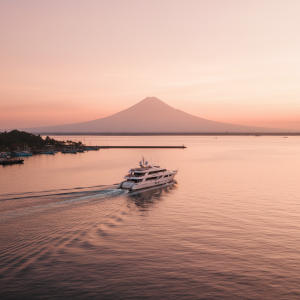
The twin MAN diesel engines settle into a deep, reassuring hum beneath the deck. Salt spray, cool and sharp, kisses your face as the phinisi schooner cuts a clean wake through the turquoise water of the Benoa channel. To the west, the sun begins its ascent, casting the volcanic silhouette of Mount Agung in a dramatic, hazy glow. This is the moment a charter begins—a feeling of absolute freedom as you leave the shore behind. Yet, the truest luxury of a bali private boat hire isn’t the champagne on ice or the thread count of the linens; it’s the profound sense of security that comes from knowing the unseen, meticulously planned world of maritime safety is operating flawlessly around you. It’s an assurance built not on chance, but on certification, technology, and uncompromising professionalism.
Beyond the Brochure: Vetting Your Charter’s Crew and Credentials
Anyone can polish teak and fluff pillows, but the real measure of a premier charter lies in the pedigree of its crew. When I consult with clients on selecting a vessel, the first file I open is not the photo gallery, but the crew’s qualification dossier. The captain of a high-end bali luxury yacht should possess, at a minimum, a Yachtmaster Offshore or Master 200 GT license, but I look for more. I want to see years of logged sea time specifically within the Indonesian archipelago. Navigating the Lombok Strait, a major channel of the Indonesian Throughflow, where currents can surge at over 6 knots, is a world away from a placid Mediterranean cruise. I once spoke with Captain Iwan, a seasoned mariner with 15 years navigating these waters, who noted, “The charts tell you the depths, but only experience tells you how the tide interacts with the reef at the Gili islands on a new moon.” That is the level of granular knowledge you are investing in. The crew’s certifications should be current, particularly the STCW (Standards of Training, Certification and Watchkeeping), which includes mandatory first aid and firefighting training. A top-tier charter will operate with a crew-to-guest ratio of no less than 1:3, ensuring impeccable service and, more critically, multiple sets of trained eyes on the water and on deck. A charter broker like the Bali Luxury Yacht Bureau plays a crucial role here, acting as your quality assurance agent by rigorously vetting these credentials long before you ever step aboard.
The Anatomy of a Seaworthy Vessel: Hardware and Hull Integrity
The visual appeal of a yacht is seductive, but its safety is determined by the systems humming away behind the bulkheads and the integrity of the hull beneath your feet. A reputable charter vessel, regardless of its flag state, should be built and maintained in the spirit of SOLAS (Safety of Life at Sea) conventions. This philosophy dictates the quality and redundancy of its most critical systems. On the bridge, I expect to see a full suite of modern electronics from respected manufacturers like Furuno or Simrad. This includes dual GPS plotters, 4G radar for tracking weather squalls, and an AIS (Automatic Identification System) transceiver. AIS is non-negotiable; it broadcasts your vessel’s identity, course, and speed, and receives the same from other ships, effectively eliminating the risk of collision in busy channels. For communication, a standard VHF radio is merely the baseline. For any voyage venturing beyond the immediate southern Bali coastline—say, towards Komodo or Raja Ampat—a satellite phone, either Iridium or Inmarsat, is essential for staying connected when you are hundreds of kilometers from the nearest cell tower. Below the waterline, regular maintenance is paramount. Ask for the vessel’s maintenance log or the date of its last haul-out for inspection and anti-fouling. A well-maintained bali private boat hire is a transparent one, with records to prove its seaworthiness.
Emergency Preparedness: From Life Rafts to Medical Kits
The hallmark of a truly professional operation is how it prepares for events it hopes will never happen. Onboard emergency equipment should be extensive, accessible, and impeccably maintained. Start with personal flotation devices. You should see more than enough standard life jackets for every person onboard, but a premier vessel will also have self-inflating vests for active use and an appropriately sized jacket for every child. Look for the life rafts. They should be stored in canisters fitted with hydrostatic release units, which automatically deploy if the vessel sinks. Check the service date stamped on the outside; they require professional inspection and repacking every 12 to 24 months. Fire suppression is another critical area. An automatic system, like a CO2 or FM-200 extinguisher, should be installed in the engine room, supplemented by multiple handheld extinguishers and fire blankets located strategically throughout the yacht, especially in the galley. The medical kit should go far beyond basic bandages. A proper offshore medical kit, often costing over $2,500, will contain trauma dressings, splints, IV kits, a defibrillator (AED), and a broad spectrum of medications. At least one crew member, if not more, should have advanced medical training, such as Medical First Aid at Sea. In an archipelago of over 17,000 islands, as noted by indonesia.travel, the distance to the nearest clinic can be significant, making the vessel’s own medical capacity a vital safety feature.
Navigating the Elements: Weather, Tides, and Itinerary Planning
The most powerful force at sea is nature itself, and the safest captains are those who treat it with profound respect. A key component of safety in a bali private boat hire is intelligent and flexible itinerary planning. Before you even leave the harbor, your captain should be analyzing multiple weather models, satellite imagery, and local tide charts. They understand the difference between the dry season (typically April to October) and the wet season, and how local microclimates can create sudden squalls even on a clear day. The waters of Indonesia, particularly around the Lesser Sunda Islands, are famously complex. This region is a nexus of powerful oceanic currents, including the Indonesian Throughflow, which moves vast amounts of water between the Pacific and Indian Oceans. This creates challenging, sometimes unpredictable, sea states that demand expert seamanship. A red flag for any charter is a completely rigid itinerary. A professional captain will always present a plan but will also explain the potential contingencies based on weather. Their authority to alter the course or delay departure for safety reasons must be absolute. This is especially true when your destination is a protected and ecologically sensitive area like the Komodo National Park, where preserving the environment is as important as navigating its challenging channels. A great charter experience is one that works in harmony with the sea, not one that fights against it.
The Pre-Departure Briefing: Your Role in Onboard Safety
Safety is a collaborative culture, not just a list of equipment. The moment you step aboard, one of the first and most important procedures should be a comprehensive safety briefing from the captain or first mate. This is not a casual, two-minute formality; it is a structured and vital transfer of knowledge that empowers you, the guest, to be an active participant in your own safety. A professional briefing, much like the one you receive on a commercial airliner, should take at least 15 minutes and cover several key points. You will be physically shown the location of all life jackets, including how to properly don one. The crew will identify the muster stations—the designated meeting points in case of an emergency. They will demonstrate the location and basic operation of fire extinguishers and explain the “man overboard” procedure. This briefing sets the tone for the entire trip, signaling that the crew takes their responsibilities with the utmost seriousness. It’s a hallmark of every professionally managed bali luxury yacht and a clear indicator that you are in capable hands. Pay close attention, ask questions, and ensure your entire party, including any children, understands the key instructions. This small investment of time at the dock is one of the most significant contributions to a safe and seamless voyage.
Quick FAQ on Bali Yacht Charter Safety
Is comprehensive travel insurance necessary for a Bali boat charter?
Absolutely, and any reputable charter operator will insist you have it. Standard travel insurance is often insufficient. Your policy must include specific coverage for maritime activities and, most importantly, emergency medical evacuation. An airlift from a remote island like those in the Komodo chain to a hospital in Bali or Singapore can easily exceed $50,000, a cost your insurance should be prepared to cover. Review your policy’s fine print before you book.
What about the risk of piracy in Indonesian waters?
This is a common question, but the concern is largely misplaced for leisure charters in Bali’s cruising grounds. While piracy in the 21st century remains a serious issue in specific global shipping choke-points like the Malacca Strait or the Gulf of Aden, these areas are hundreds, if not thousands, of kilometers away. The tourist routes around Bali, Lombok, the Gili Islands, and Komodo are secure and well-patrolled by the Indonesian marine police. Your captain will remain on established, safe routes.
How are the small tenders (dinghies) used for excursions kept safe?
The safety standards for the yacht’s tender should be just as high as for the main vessel. The tender, typically a rigid inflatable boat (RIB), must be equipped with its own safety kit, including a handheld VHF radio, flares, and a first-aid kit. The outboard engine must have a functional kill-cord, which the operator wears at all times. The crew member operating the tender should be highly experienced, particularly in managing surf during beach landings, which can be tricky. Life jackets should be worn by all passengers during transit, especially in choppy conditions.
Ultimately, the essence of true luxury at sea is not extravagance, but the peace of mind that allows you to fully immerse yourself in the experience. It is the confidence that every detail, from the captain’s credentials to the satellite phone’s functionality, has been meticulously addressed. Safety is the silent, ever-present foundation upon which an unforgettable journey is built. When you seek a bali private boat hire, you are not just chartering a vessel; you are entrusting your well-being to its crew and systems. Ensure that trust is well-placed. To explore a fleet of meticulously vetted vessels where safety is the first priority, view the curated collection of bali luxury yacht options available through our trusted partners.