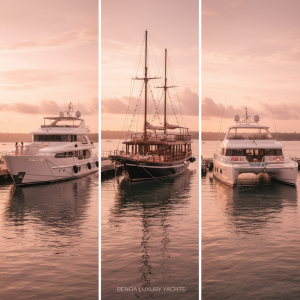
When is the Best Time for a Luxury Yacht Trip in Bali?
The best time for a luxury yacht trip in Bali is during the dry season, from April to October. This period presents the most favorable conditions, with calm seas, minimal rainfall, and clear blue skies, creating the perfect backdrop for cruising, diving, and exploring the archipelago.
- Optimal Sea Conditions: Enjoy placid waters with underwater visibility often reaching 30-40 meters, ideal for snorkeling and diving.
- Ideal Weather: Expect consistently sunny days with average temperatures of 27-31°C (80-88°F) and lower humidity.
- Expanded Exploration: Favorable winds and calm seas allow for comfortable and safe passage to remote eastern islands like Komodo and Flores.
The air, thick with the scent of clove and frangipani, drifts across the teak deck. Below, the gentle percussion of turquoise water laps against the hull of your private vessel, a steady rhythm marking the start of your escape. The equatorial sun warms your skin as the silhouette of Benoa Harbor recedes. This is the moment a Bali yacht charter truly begins. But in a destination governed by the whims of the monsoon, timing is not just a detail; it is the very architecture of an extraordinary voyage. It delineates a pleasant holiday from a truly seamless, once-in-a-lifetime expedition. Choosing the right month transforms the sea from a mere backdrop into your private, crystalline playground.
Decoding Bali’s Two Seasons: Dry vs. Wet
Unlike the four distinct seasons of the northern hemisphere, Bali’s climate is a simpler, more dramatic duality defined by the monsoon. Understanding this binary rhythm is the first and most critical step in planning. The island, located just 8 degrees south of the equator, is governed by two dominant periods: the dry season and the wet season. The dry season, running roughly from April through October, is unequivocally the prime time for maritime pursuits. During these months, a consistent southeasterly wind prevails, humidity drops to a comfortable 70-75%, and rainfall is scarce, often totaling less than 50 millimeters per month. The skies are a painter’s cerulean blue, and the sea state across the Indonesian archipelago is at its most placid. This is the high season for a reason; conditions are as close to perfect as nature allows, especially for the multi-day charters that a premier Bali private yacht charter can offer.
Conversely, the wet season arrives in November and typically lasts through March. This period is characterized by northwesterly winds, which can bring moisture-laden air, higher humidity often exceeding 85%, and significant rainfall, with January and February being the wettest months, sometimes seeing over 350 millimeters of rain. These monsoonal downpours are often intense but brief, usually occurring in the afternoon and clearing to reveal a refreshed, vibrant landscape. While the wet season presents challenges like choppier seas in open channels like the Lombok Strait, it is not without its merits. The island is at its most verdant, waterfalls are at their most powerful, and charter rates can be notably more accessible. For itineraries focused on Bali’s southern coastline and the sheltered bays of the Nusa Islands, this season can still offer a magnificent, crowd-free experience.
The Shoulder Seasons: A Strategic Choice for the Discerning Traveler
While the peak months of July and August represent the pinnacle of dry-season perfection, they also coincide with peak tourist arrivals from Europe and Australia. For the traveler who values solitude as much as sunshine, the true sweet spot lies in the shoulder seasons: April to June, and again from September to October. From my editorial perspective at Departures, these are the months I consistently recommend to our most discerning readers. During this time, you are graced with the glorious weather of the high season—calm seas, abundant sun, and comfortable temperatures—but without the associated throngs. The island breathes a little deeper, the anchorages are quieter, and there is a palpable sense of tranquility that can be lost in the mid-summer rush.
The strategic advantage extends beyond mere atmosphere. Availability for the most sought-after vessels, from sleek, modern superyachts to majestic Phinisi schooners, is significantly better. Chartering a vessel in May versus August can sometimes yield a preferential rate of 10-15%, allowing for an extended itinerary or an upgrade in vessel class. I recall a trip in late September where we had the entire Manta Point bay off Nusa Penida to ourselves for nearly two hours—an experience almost unheard of just six weeks prior. These months provide the best of all possible worlds: peak conditions, lower density, and greater flexibility. It’s the insider’s choice, balancing meteorological certainty with a more personal, intimate encounter with the archipelago. Tourist arrivals during these periods can be up to 40% lower than in the July/August peak, a statistic that translates directly to a more exclusive experience on the water.
Aligning Your Itinerary with the Calendar: East vs. West
A sophisticated understanding of Bali’s seasons goes beyond a simple dry-versus-wet calculation; it involves geographical strategy. The “best time” is intrinsically linked to *where* you intend to sail. The Indonesian archipelago is vast, and conditions can vary dramatically across its 17,000 islands. During the prime dry season (April-October), the prevailing southeasterly winds and calm seas open up the eastern corridors. This is the definitive window for ambitious voyages from Bali to the Gili Islands, Lombok, Sumbawa, and, most notably, the UNESCO World Heritage-listed Komodo National Park. The crossing of the Lombok Strait—a deep, powerful channel—is most comfortable during these months, making the 250-nautical-mile journey to see the famed Komodo dragons a safe and pleasurable expedition. Attempting this passage during the wet season is often ill-advised due to potentially rough and unpredictable conditions.
Conversely, the wet season (November-March) shifts the focus to Bali’s immediate surroundings. While long-distance eastward passages are off the table, this period is excellent for exploring the southern coast and the nearby Nusa Islands (Lembongan, Ceningan, and Penida). The northwesterly winds can, in fact, create beautifully sheltered conditions in the leeward bays of these islands. Captain Wayan Suteja, a veteran Phinisi skipper I’ve sailed with for over a decade, puts it best: “In August, we chase dragons in Komodo. In January, we chase tranquility in the secret coves of Nusa Penida.” The landscapes are intensely green, and the occasional rain shower simply adds to the tropical ambiance. It’s a time for shorter, more focused itineraries that celebrate the lush beauty of Bali itself, proving that a rewarding luxury yacht charter from Benoa Harbor is possible year-round with the right plan.
The Cultural Calendar: Weaving Festivals into Your Voyage
A truly luxurious journey is one that immerses you in the destination’s cultural fabric. Timing your yacht trip to coincide with Bali’s unique festivals can elevate the experience from a scenic tour to a profound cultural encounter. The Balinese calendar, or Pawukon, is a complex 210-day cycle, meaning major holidays shift each year. The most significant of these is Galungan, a 10-day festival celebrating the victory of dharma (good) over adharma (evil). During this time, the entire island is adorned with magnificent *penjor*—tall, decorated bamboo poles that arch gracefully over the streets. Witnessing this island-wide decoration from the serene vantage point of your yacht’s deck is an unforgettable sight. Your charter can arrange for a tender to take you ashore to observe the vibrant temple ceremonies.
Perhaps the most unique event is Nyepi, the Balinese Day of Silence, which typically falls in March. For 24 hours, the entire island comes to a complete standstill. All activity ceases; the airport and seaports close, no traffic is allowed on the roads, and no lights are used after dark. For a traveler, a yacht is the ultimate sanctuary. By anchoring just offshore, you can respectfully observe this sacred day from a unique perspective. As night falls, the complete absence of light pollution reveals a celestial panorama of the Milky Way that is simply impossible to witness at any other time. It is a deeply moving and exclusive experience. Other events, like the Bali Arts Festival in June and July, offer a month-long immersion into the island’s performing arts, as detailed by portals like Indonesia.Travel. A well-briefed crew can seamlessly integrate these cultural highlights into your sailing itinerary.
Diving and Marine Life: A Subaquatic Timetable
For many who charter a bali luxury yacht, the world beneath the waves is as compelling as the one above. The timing of your trip directly impacts the quality and nature of marine encounters. While Bali offers world-class diving year-round, with water temperatures a balmy 28-29°C (82-84°F), the dry season (April-October) provides the best overall conditions. During these months, the lack of rain and land runoff results in supreme underwater visibility, frequently exceeding 30 meters, particularly around the protected reefs of Menjangan Island in West Bali National Park and the vibrant coral gardens of Tulamben.
Specific marine life migrations and behaviors are also highly seasonal. The most sought-after sighting for advanced divers is the elusive Mola Mola, or oceanic sunfish, the world’s heaviest bony fish, weighing up to 2,300 kg. The peak season for spotting these gentle giants is from July to October, when cold-water upwellings around Nusa Penida and Candidasa draw them up from the deep. These same upwellings can cause water temperatures to dip to a brisk 21-24°C, so a thicker wetsuit is advised. In contrast, the majestic manta rays at Manta Point off Nusa Penida can be seen year-round, but the calmest and clearest surface conditions for observing them are found within the dry season. An expert charter service will tailor your itinerary to these subaquatic calendars, ensuring your dives are timed for maximum reward, whether it’s witnessing the Mola Mola migration or drifting over pristine coral walls in crystal-clear water.
Quick FAQ: Your Bali Yachting Questions, Answered
Is it significantly cheaper to charter a yacht in the wet season?
Yes, charter rates during the low season (primarily November through February, excluding holiday periods) can be 15-25% lower than during the peak dry season. This presents a considerable value proposition, but it requires a trade-off. You must be prepared for intermittent rain showers and potentially rougher seas, which may limit your itinerary to more sheltered, local waters. It is a calculated decision for the flexible traveler.
What about wind conditions for sailing?
The dry season is superior for sailing enthusiasts. The southeasterly trade winds are famously reliable, blowing consistently at a pleasant 10-15 knots—perfect for a traditional Phinisi under full sail. During the wet season, the northwesterly winds can be gustier and less predictable, making for a more challenging and less consistent sailing experience. For a pure sailing journey, April through September is the undisputed champion.
Can I still visit the Gili Islands in the wet season?
While technically possible on certain days, it is generally not recommended. The Lombok Strait, which separates Bali from Lombok and the Gili Islands, is a deep and powerful oceanic channel. According to the Indonesian throughflow, it funnels massive volumes of water. In the wet season, strong winds against this current can create very rough and uncomfortable conditions. A passage that takes a smooth 4 hours in July could become a turbulent 7-hour ordeal in January. It is safer and far more pleasant to reserve this trip for the dry season.
How far in advance should I book for the peak season?
For the high season months of July and August, we strongly advise booking 9 to 12 months in advance. The most reputable and sought-after vessels, especially the larger, custom-built Phinisi schooners that define the ultimate Indonesian charter experience, are often reserved more than a year out for these prime European and Australian holiday windows. Planning ahead is essential to secure your first choice of yacht and itinerary.
Ultimately, timing is the invisible thread that weaves together a perfect maritime journey. It dictates the clarity of the water, the mood of the sky, and the scope of your adventure. Understanding the nuances of Bali’s seasons is the first step in planning the ultimate bali luxury yacht escape. Whether you envision a serene June sail through the Komodo archipelago or a vibrant December discovery of Nusa Penida’s lush coastline, the perfect voyage is a matter of precise orchestration. The charter specialists at the Bali Luxury Yacht Bureau are masters of this orchestration, crafting bespoke itineraries that align the seasons with your personal desires. Contact their team to begin designing your definitive Indonesian sea story.
Related reading